


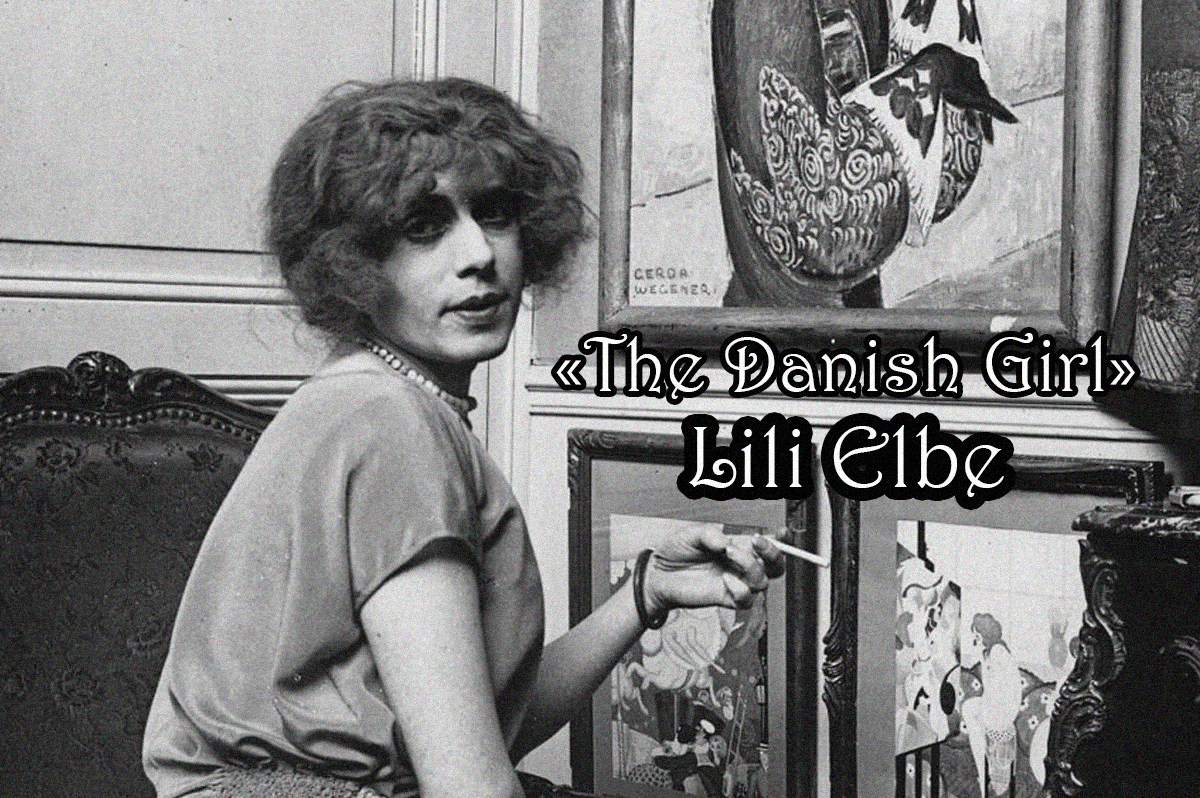
Lili Ilse Elvenes, known as Lili Elbe, was a Danish painter, model, and one of the first recipients of gender-affirming surgeries.
Early life
Elbe was born in 1882 in a small town in Denmark. There are some speculations suggesting that she was intersex, although this fact has been disputed. According to some reports, Elbe had Klinefelter Syndrome, possessing rudimentary ovaries.
Artistic from a young age, Elbe traveled to study at the Royal Danish Academy of Fine Arts in Copenhagen, where she met her future wife, Gerda Wegener-Gottlieb. The two painted together, with Elbe specialising in landscapes while Gottlieb illustrated books and fashion magazines.
Life as Lili Elbe
Upon settling in Paris in 1912, Elbe began living more openly as a woman and posing as Gottlieb’s sister-in-law. She adopted the name Lili, which had been suggested by Anna Larssen – the model Elbe filled in for when Larssen was late for a sitting. She chose her last name, Elbe, after a river in Central Europe flowing through Dresden – the place where her last gender-affirming surgeries took place. Gottlieb’s paintings, for which Elbe was the model, gained her fame. Elbe herself stopped painting after her transition.
Transition and surgeries
Prior to the surgeries, Elbe received psychological counseling from Magnus Hirschfeld – a German sexologist and advocate for the rights of LGBTQ+ people.
The first of four operations happened in 1930 in Germany, where gender-affirming treatment was largely experimental at the time. Elbe received inguinal orchiectomy (removal of the testicles). The next three surgeries took place in 1930 and 1931, conducted by Dr. Kurt Warnekros at the Dresden Municipal Women’s Clinic. Those included a penectomy (penis removal through surgery) and transplantation of the ovarian tissue.
The surgeries allowed Elbe to legally change her name and sex, and she received a new passport under the name Lili Ilse Elvenes. However, it came with a downside: as she was legally recognised as a woman, her marriage to Gottlieb was nullified in 1930 by the King of Denmark. The two parted ways on good terms.
Later on, Elbe’s old friend asked for her hand in marriage. In 1931, Elbe returned to the Women’s Clinic in Dresden for her fourth and final surgery. As she wished to have children with her fiancé, she went on to receive a vaginoplasty (surgical construction of a vagina) and a uterus transplant.
Sadly, her dream never came to be as her immune system proceeded to reject the transplanted uterus. Three months after the surgery, Elbe died from cardiac arrest, which was caused by the infection.
Legacy
Although Elbe stopped painting once she transitioned, some of her works gained success and became part of her legacy. Those include Portrait de femme (1923), Parti Fra Capri (1921), View from the Garden of Versailles (1922), Coastal View from France (1918), and Trianon (1920).

“The Danish Girl” is a novel written in 2000 by the writer David Ebershoff, which became an international bestseller. It provided one of the first fictional accounts of gender-affirming surgery. In 2015, a film under the same name was released to the public. In 2026, it was announced that the novel would be adapted into the stage musical.
