


Authors: Serafim & Alex, transgender people
You’ve most likely heard at some point that “being transgender is a recent trend that young impressionable people are falling for”, however, that is not the case at all.
A look at our history, which modern society has often attempted to erase, shows that transgender (including non-binary and third gender) people date back as far as ancient times in worldwide cultures. Some of them include, but are not limited to: Ancient Egypt, Africa, North America (prior to colonization), South America, Iran, Palestine, China, Japan, India, Philippines, and so on.
It is challenging to write a precise history of the transgender population’s global occurrence, as the modern notion of transgender identity and gender did not emerge until the middle of the 20th century. However, studies show that many cultures prior to European colonization often had a third gender or some form of gender diversity within their people.
While the general public is familiar with Marsha P. Johnson, Christine Jorgensen, Sylvia Rivera, and Lili Elbe, there are many more lesser-known transgender historical figures, many of whom have advanced our medical practices, laws, literature, and more, through their creativity, discoveries, and courage.
Huang Chonggu (886–924)

Originally the daughter of a civil servant, Huang was raised by a maid after becoming an orphan at a young age. He started dressing like a man when he was very young.
Around 915, Huang was arrested on suspicion of arson and wrote a poem in his defense, which resulted in being acquitted by the Prime Minister of the state of Shu, Zhou Xiang, who was impressed by the intelligence and talent exhibited in his defense. He later received a scholarship from Zhou Xiang to attend a nearby university, and was later employed by him upon completing education in the local administration. He was said to be a gifted poet, an accomplished chess player, and an effective official and administrator while he was there.
Being so impressed with his abilities, Zhou Xiang offered one of his daughter’s hands in marriage. At this point, Huang was forced to reveal his biological sex, which he did by writing a poem, and while the prime minister respected that he lived as a man, the administration did not and Huang was fired.
Kalonymus ben Kalonymus (1286–died after 1328)
Kalonymus ben Kalonymus was a Jewish philosopher and translator from Hachmei Provence (now Provence, France). Kalonymus studied philosophy and rabbinical literature at Salon-de-Provence.
In the poem Even Boḥan, Kalonymus expresses lament and curses being male-assigned at birth, referring to her penis as a מוּם (múm), aka a “defect”, and yearns to be female.
(…)
Who would then transform me from a man to woman?
Were I only to have merited this being so graced by goodness
I could have now been the lady of the house,
encamped in my house against armies!
What shall I say?
why cry or be bitter?
If my father in heaven has decreed upon me
and has maimed me with an immutable deformity
then I do not wish to remove it.
the sorrow of the impossible is a human pain that nothing will cure
and for which no comfort can be found.
So, I will bear and suffer until I die and wither in the ground.
Since I have learned from our tradition
that we bless both, the good and the bitter
I will bless in a voice hushed and weak:
blessed are you YHVH who has not made me a woman.
The full text of the poem can be found here: https://opensiddur.org/prayers/civic-calendar/international-civil-calendar/transgender-day-of-visibility/prayer-of-kalonymus-from-sefer-even-bohan-1322
Frances Thompson (1840–1876)

Formerly enslaved black transgender and anti-rape activist Frances Thompson was one of five black women who testified before a congressional committee looking into the 1866 Memphis Riots.
She is thought to be the first female transgender witness to appear before the US Congress. Among the numerous women who were raped during the riots were Thompson and her housemate Lucy Smith, who were attacked by a white mob. In 1876 she was taken into custody for “being a man dressed in women’s clothing”. Thompson was assigned male at birth and was born into slavery in Alabama, living as a free woman in a Black neighborhood in Memphis, Tennessee, by the time she was 26 years old.
She lived openly as a woman, wearing brightly colored dresses and shaving her face clean, earning a living doing laundry.
We’wha (c. 1849–1896)
We’wha was a Zuni Native American lhamana from New Mexico, a well-known potter and weaver. As the most well-known lhamana in history, We’wha was a cultural representative of Native Americans in general and the Zuni in particular, making contact with and educating numerous European-American settlers, educators, soldiers, missionaries, and anthropologists, visiting Washington, D.C. in 1896 and meeting President Grover Cleveland.
The lhamana are male-bodied individuals who occasionally assume the ceremonial and social roles that are typically filled by women in their culture. Other times they may assume roles that are more typically associated with men.

Amelio Robles Ávila (1889–1984)

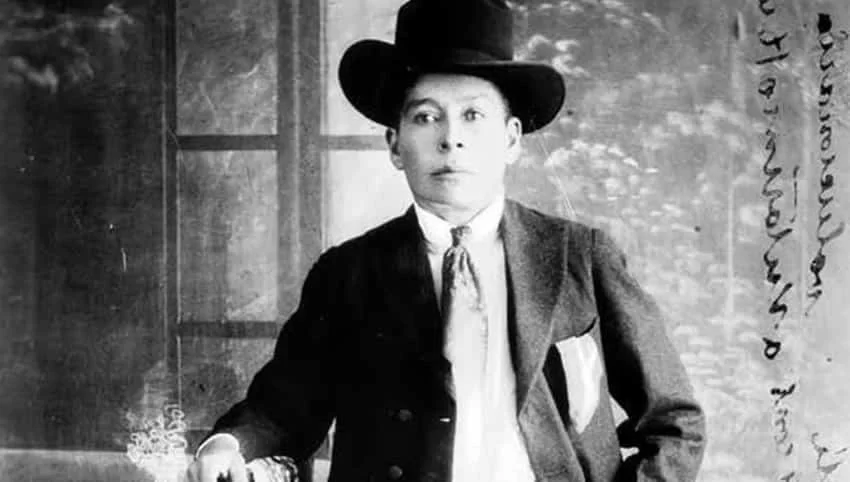
During the Mexican Revolution, Amelio Robles Ávila started dressing and demanding to be treated like a man. He was promoted to colonel after establishing himself as a capable leader, and lived as a man from the age of 24 and until his death. His identity was accepted by his family, society, and the Mexican government.
According to a neighbor, Robles would threaten people with a pistol if they called him a woman, and he killed two men who attacked him and attempted to expose his anatomy.
Dr. Alan Hart (1890–1962)

Born in Oregon, Dr. Alan Hart sought medical help as an adult to facilitate his transition and allow him to live as a man full-time. Despite synthetic testosterone not being yet available, Dr. Joshua Gilbert eventually performed a complete hysterectomy on Hart to stop menstruation and prevent pregnancy. Following the procedure, Dr. Hart married, published multiple books, and opened two medical practices.
His most well-known contributions were those of an epidemiologist, whose studies greatly reduced the death toll from tuberculosis by aiding in its diagnosis and treatment. Following World War II, Dr. Hart was able to start hormone replacement therapy, which facilitated the growth of facial hair and a deeper voice.
These historical figures are just a few documented examples of transgender people throughout time, yet they are extremely important all the same.
Due to systemic erasure, many transgender and gender non-conforming individuals have sadly been lost to history, but there are many more that survived the tests of time and remained visible to us through their discoveries, art, and acts of courage.
Their stories serve as a reminder to the transgender community, and to society as a whole, that we’ve always been around, and that we will continue to be visible, to speak out, and to be part of this world.
