


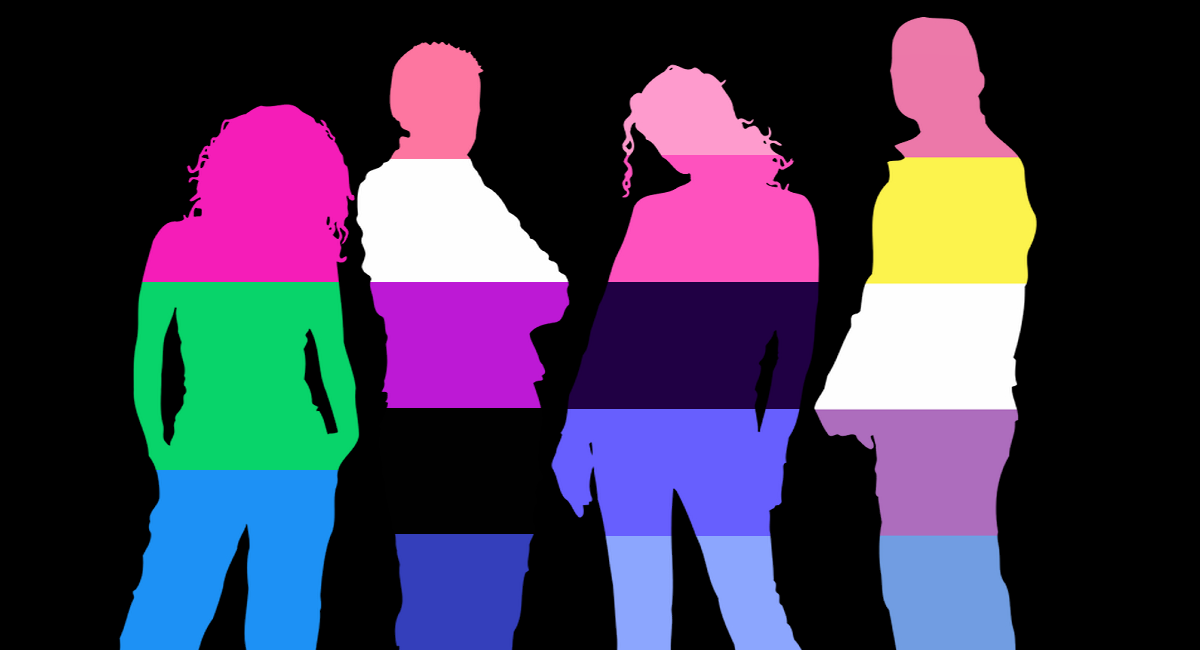
Authors: Alex and Luci, transgender people
The term “microlabel” is used to describe a gender identity or sexual orientation that is part of, or overlaps with a broader identity, commonly referred to as an umbrella term. Microlabels are often described as being “hyperspecific”, which means they denote a very particular experience connected to gender, sexual orientation, etc.
While microlabels might appear “unnecessary” and difficult to understand at first, they can be helpful for some individuals, as they offer a way to describe their own unique experiences with gender, sexuality, etc. In these cases, people may find that using a broader term simply does not resonate with their personal experience.
In essence, “labels that are perfect for describing one person’s experience may be too specific for another person, while also not being specific enough for someone else”.
Furthermore, identifying with a microlabel does not prevent someone from also identifying with a broader umbrella term. While choosing to share their microlabels privately with trusted individuals, some people may publicly state that they identify with a more general term to minimize unwanted questions or potential misunderstandings.
Some examples of umbrella terms are lesbian, gay, bisexual, transgender, asexual, etc.
These broader identities encompass an array of smaller, more specific labels. For instance, “asexual” can act as an umbrella term for the following microlabels:
Demisexual – an individual who does not experience sexual attraction unless a deep emotional bond develops first;
Apothisexual – an individual who does not experience sexual attraction, and is repulsed by the idea of engaging in sexual activities.
“Bisexual” can act as an umbrella term for:
Omnisexual – an individual who is attracted to people of all genders;
Polysexual – an individual who is attracted to various, but not necessarily all genders;
Pansexual – an individual who is attracted to people regardless of their gender;
Similarly to sexual identities, the transgender spectrum also includes various microlabels, such as:
Bigender – anindividual who possesses two distinct gender identities that can manifest simultaneously or fluctuate between masculine and feminine expressions;
Agender – an individual who lacks a gender completely, or has a very minimal sense of it;
Demigender – an individual who experiences partial connection to one gender while also identifying with another gender, or none at all.
Subcategories include demi-boy, or demi-man, who partially identify as male, and demi-girl, or demi-woman, who partially identify as female. Demiflux people possess a stable non-binary identity with fluctuating intensities of other gender identities;
Genderfluid – an individual whose experience of gender is fluid, meaning it can vary or change depending on time, place, or circumstances, combining aspects of one or more genders at different points;
Xenogender – a range of identities that fall outside of what is typically defined as a gender, which includes genders that have a connection with animals, plants, abstract terms, or other categories that bypass the “human” understanding of gender.
The specific nature of microlabels has led to them facing considerable criticism.
Some older members of the LGBTQ+ community have expressed that they find these specialized terms frustrating and confusing, feeling the obligation to learn new, highly specific terminology instead of the more familiar, general terms they are accustomed to.
Some may argue that the majority of these labels are “essentially the same thing”, or that they overlap excessively, deeming microlabels unnecessary. This discourse has generated a divide between several community members, as microlabels are often dismissed as mere whims, while the individuals using them are frequently infantilized.
While everyone is entitled to their own opinion, we must acknowledge that, for some people, microlabels are a way to better understand themselves and their identity, making them feel more valid.
Additionally, supporting microlabels increases visibility and prevents marginalization/erasure within the queer community, allowing more people to comfortably fit in.
The idea behind such hyper-specific language is to help the individual better identify and label their experiences, as they are not the same for everybody.
Even if it’s hard to digest, it is still entirely possible to remain polite and respectful towards people whose feelings and experiences are different from ours.
In the end, embracing inclusivity within the LGBTQ+ community is the key step towards celebrating its diversity.
